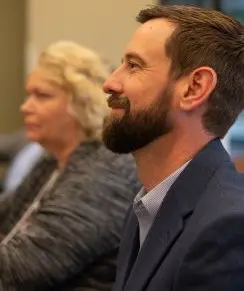
What began as a successful leadership development model in Iowa is quickly gaining momentum in Illinois.
The Illinois Community College Leadership Institute (ICCLI), co-sponsored by OCCRL and the Illinois Community College Board, returned for its second year in May under the Community Colleges, Data Literacy, and Equitable Leadership theme. Hosted at Richland Community College, the institute brought together emerging leaders from across the state for meaningful dialogue, professional development, and relationship building centered on the future of community college leadership.
Participation increased by 40% over the inaugural institute, reflecting growing interest in leadership development opportunities tailored to the community college sector. Sessions explored topics ranging from quantitative data literacy and equitable decision-making to strengthening relationships between college leaders and boards of trustees.
Attendees also toured key areas of Richland’s campus, including a groundbreaking carbon capture and storage initiative that is positioning the college as a leader in sustainability and innovation. The event also showcased Richland’s hospitality programs through lunch prepared by Bistro Five Thirty Seven.
For H.M. Kuneyl, a third-year doctoral student in the Department of Education Policy, Organization and Leadership (EPOL) and ICCLI coordinator, one of the institute’s greatest strengths is its ability to bring scholars and practitioners together in a shared learning environment.
“The 48 community colleges in Illinois are spread throughout the state, especially in rural areas, making it challenging to find equity-minded individuals to be in community with,” said Kuneyl, whose research focuses on community colleges and their history. “My goal is to help facilitate that sense of community for these scholars and practitioners who are shining as leaders.”
A Legacy of Leadership Development
ICCLI builds on a longstanding tradition of cultivating community college leadership. OCCRL Director Lorenzo Baber brought the concept to Illinois after leading leadership development initiatives at Iowa State University inspired by the work of Dr. Larry Ebbers.
In 1989, Ebbers launched the Leadership Institute for a New Century, a program designed to prepare women and people from historically underrepresented backgrounds for leadership positions within community colleges. He later established the Community College Leadership Initiative Consortium, which focused on developing mid- and senior-level administrators.
ICCLI combines key elements of both programs, emphasizing leadership development through an equity-centered lens.
Over the years, Ebbers has witnessed the lasting impact of these initiatives, with many participants advancing into influential leadership roles throughout the community college system.
“The relationships throughout the system are enhanced by the number of people who are able to work together because of bonds developed through programs such as ICCLI,” Ebbers said. “The scholar-practitioner approach is a benefit to all.”
Baber noted that the Illinois institute serves another critical purpose: helping institutions prepare for significant leadership transitions as experienced administrators continue to retire.
“We saw the benefits of that in terms of elevating people’s trajectory and also giving the state an opportunity to grow its own generation of leaders of community colleges,” Baber said.
Through presentations, discussions, and collaborative learning opportunities, participants gain research-based insights and practical strategies they can apply long after the institute concludes. Equally important, they develop professional networks that can support them throughout their careers.
Bridging Leadership and Governance
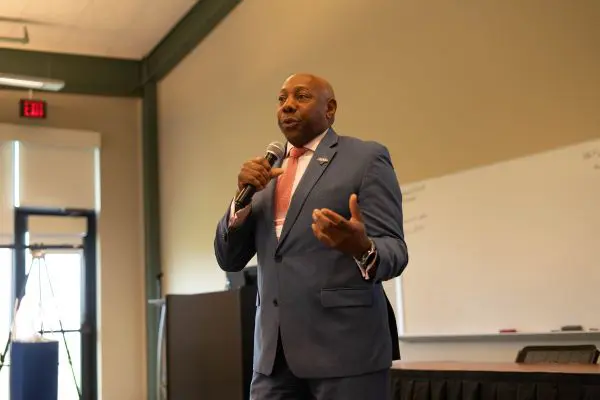
Among the featured presenters was Jim Reed, executive director of the Illinois Community College Trustees Association, who discussed the importance of productive relationships between institutional leaders and governing boards.
Reed emphasized that strong collaboration between presidents and trustees is essential to effective governance and institutional success.
“The leadership team of the president and the board work much more efficiently when the board is a high-performing one and working together as an individual unit,” Reed said. “The education and training we provide help boards achieve that high level of functionality.”
Expanding on the governance theme through an equity lens, Dr. Felecia Commodore introduced participants to the concept of culturally sustaining governance. Her presentation examined strategies for advancing equity through stronger partnerships between campus leaders and governing boards.
Participants explored ways to articulate the value of equity initiatives and assess board readiness for meaningful engagement in equity-focused work.
“It was great to hear the passion and commitment toward one of our most important sectors of higher education and their students,” said Commodore, a visiting associate professor in EPOL.
Advancing Equity Through Data and Leadership
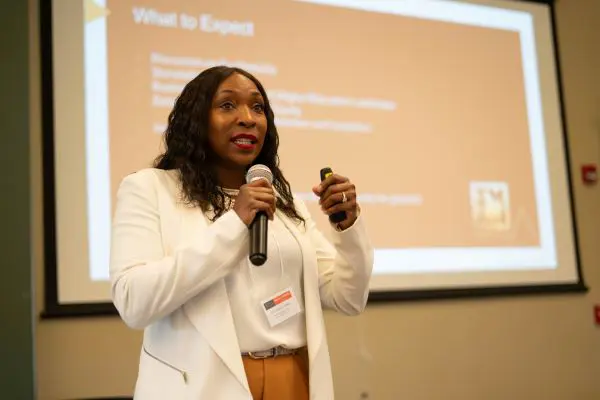
Keynote speaker Dr. LaDrina Wilson addressed the increasingly complex conversations surrounding diversity, equity, and inclusion in higher education. Wilson, founder of Iman Consulting, encouraged participants to move beyond political rhetoric and recognize diversity and inclusion as institutional strengths.
She emphasized the importance of using disaggregated data to identify needs, inform decision-making, and ensure resources are directed where they can have the greatest impact.
“The goal in doing this is to ensure student success, employee engagement, and localized inclusive economies,” Wilson said.
The institute also featured research from Dr. Marci Rockey, an Illinois alumna and former OCCRL assistant director for community college relations and research. Drawing on work conducted with Dr. Jasmine Collins, Rockey explored how geography shapes educational and workforce opportunities, particularly for rural communities of color.
Her presentation examined the extent to which Illinois higher education policies support these communities and highlighted opportunities for collaboration between institutional leaders and policymakers.
“These topics are important,” Rockey said, “given the current polarizing political atmosphere and the need for community college leaders statewide to work in collaboration with policymakers to close opportunity gaps across diverse rural, suburban, and urban districts.”
Looking Ahead
As participation continues to grow, ICCLI is emerging as a vital space for preparing Illinois' next generation of community college leaders. By combining research, practice, mentorship, and an unwavering focus on equity, the institute is helping leaders strengthen their institutions, expand opportunity, and build connections that extend far beyond the event itself.
View a photo gallery of the event and read about the inaugural 2023 Illinois Community College Leadership Institute.